Authentication

The fake autograph business is bigger than most fans realize. Forged signatures turn up at card shows, on eBay, at estate sales and in gift shops that should know better. Some are good enough to fool a collector with twenty years in the hobby.

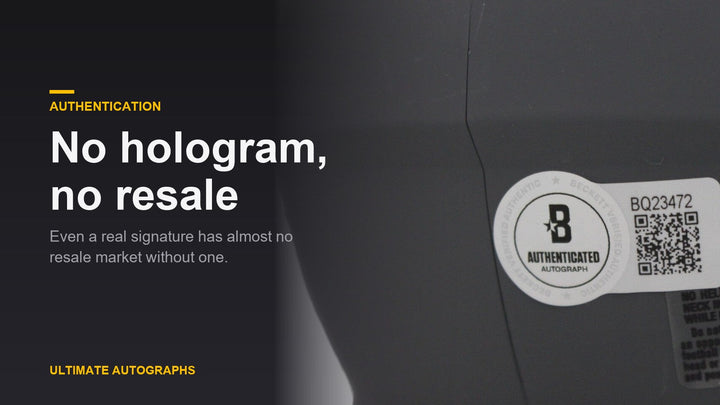
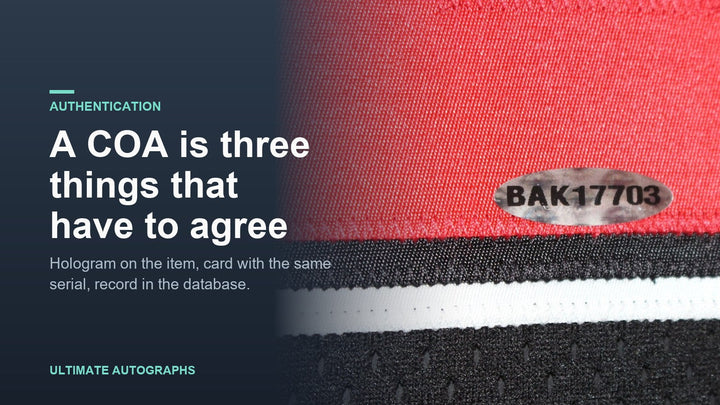
That's why authentication matters more than anything else you'll read here. A certificate of authenticity, a COA, is a promise from whoever issued it that the signature is real. That promise is only as strong as the person making it. A COA from a company that watched the athlete sign means something. A COA from the guy who sold you the item means about as much as the paper it's printed on.

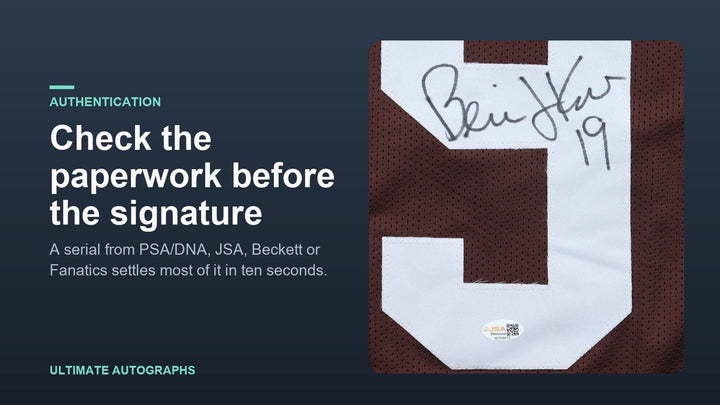
In this section: how to read a hologram and serial number, what third-party authenticators like PSA/DNA, JSA and Beckett actually do, how a witnessed signing differs from a hopeful guess, and the warning signs that a deal's too good to be true.

Every item we sell is signed in front of us or comes with authentication we trust, and you can verify any UA certificate online in about ten seconds.

Authentication

How to Tell If a Sports Autograph Is Real

The paperwork check that takes ten seconds, the signs of a forgery you can spot with your own eyes, the machine-signed fakes that fool most people,...

7 min read
Authentication

Tuesday Tips: What is a COA?

JSA. PSA. DNA. COA. If you’re just beginning to add to your personal collection, all of these abbreviations can seem confusing and overwhelming. Let’s take it...

2 min read